What is actually on a hotel key card
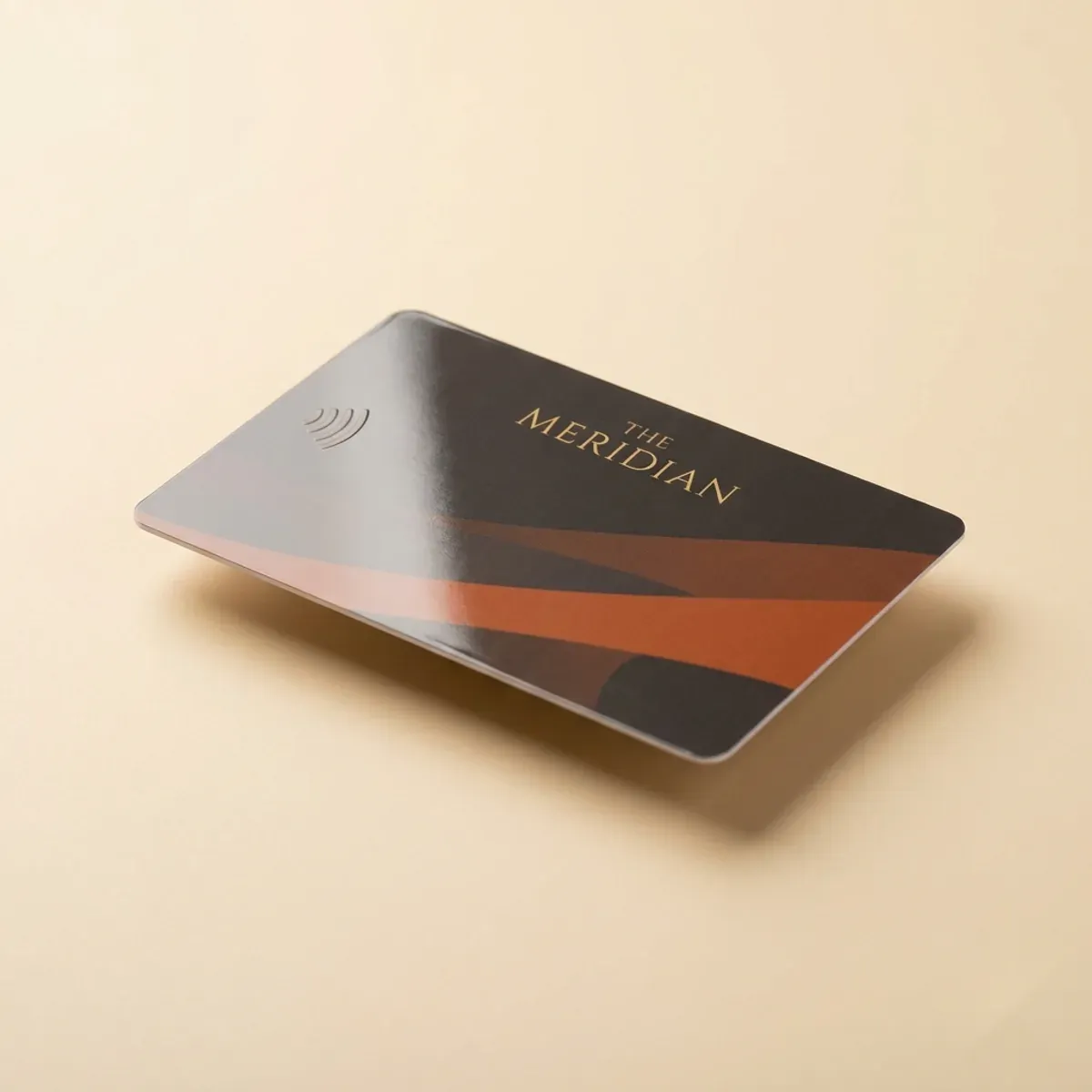
The fear around a lost room key assumes the card is a small dossier — your room number, your name, maybe your credit card. It is not. A well-configured hotel card carries an access credential, not personal data: a token that tells the lock "this key is currently valid for this door," and nothing a finder could read off it to identify you or your room.
Reputable properties deliberately keep the room number off the card and out of the encoded data, precisely so a found card cannot be walked down a corridor and matched to a door. The persistent myth that hotel cards store guest credit-card numbers has been investigated repeatedly and debunked — modern systems simply do not work that way. The card is a key, not a wallet.
Why a lost card stops working
The mechanism that makes hotels secure is rotating access codes. When a new guest checks in, the front desk encodes a fresh key, and at the lock the previous key is invalidated — the new credential effectively cancels the old one. So a card lost during your stay can be deactivated and reissued in seconds, and a card you forget to return at check-out becomes useless the moment the next guest is keyed in.
This is why the honest answer to "someone has my old hotel key" is usually "it does nothing." It is not valid for the room any longer, it is not valid anywhere else, and it carries no information about you. The security lives in the system and the lock, not in the physical card.
Encrypted cards cannot be cloned
There is a further layer on modern systems. Encrypted platforms — the current generation of RFID hotel locks — write secured, system-specific credentials protected by AES encryption. These cannot be copied by a finder with a consumer reader, because the cryptographic keys live in your lock system, not on the card.
Older standard cards use a weaker cipher and are theoretically more copyable, but even there the real-world risk to a hotel is small: the cloned credential is still cancelled at the next check-in, still maps to no guest data, and still requires physical proximity to a specific door to be of any use. The defense-in-depth — rotating codes plus no PII on the card — holds regardless of chip.
Best practices for hotels
A few operational habits make the lost-card question a non-event and let your front desk reassure guests with confidence.
- Store no PII on the card — no name, no room number, no payment data
- Keep the room number off the printed card face too
- Rely on per-stay code rotation so old keys self-invalidate
- Deactivate and reissue immediately when a guest reports a lost card
- Re-key the room (re-encode the lock) if there is any doubt
- Prefer encrypted AES cards on new builds for an uncloneable credential
- Encode blank cards on your own system rather than copying existing cards
- Securely retire or recycle returned cards rather than reissuing un-wiped
Reassuring the guest
When a guest reports a lost card, the script is short and true: the card carried no personal information, it has been deactivated so it can no longer open any door, and a new key is ready. If the guest is concerned about the room, re-keying the lock takes moments and resets the credential entirely. That calm, factual response — backed by a system designed around exactly this scenario — turns a worrying moment into a demonstration of competence.
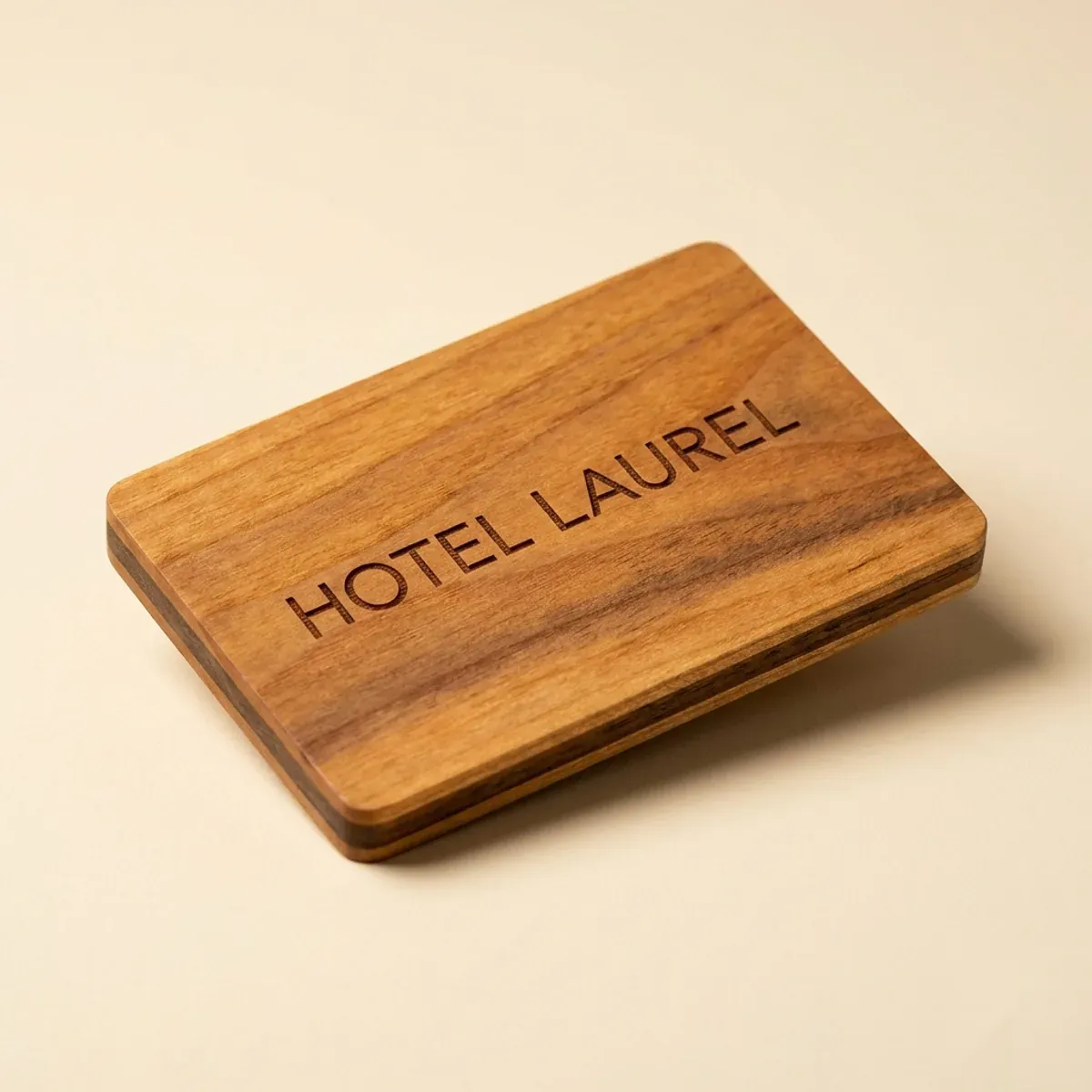
The same reassurance extends to cards guests keep as souvenirs. A retained card is harmless: it is invalidated at the next check-in, it identifies neither the guest nor the room, and on encrypted systems it cannot be cloned. Many properties lean into this with keepsake-quality wood or bamboo cards designed to be kept.