Industry
Mobile Keys vs Plastic: Why Most Hotels Still Run Both
Mobile keys are real and growing — but adoption, battery anxiety and the front-desk reality keep a printed card in nearly every welcome folder. Why most hotels still run both.
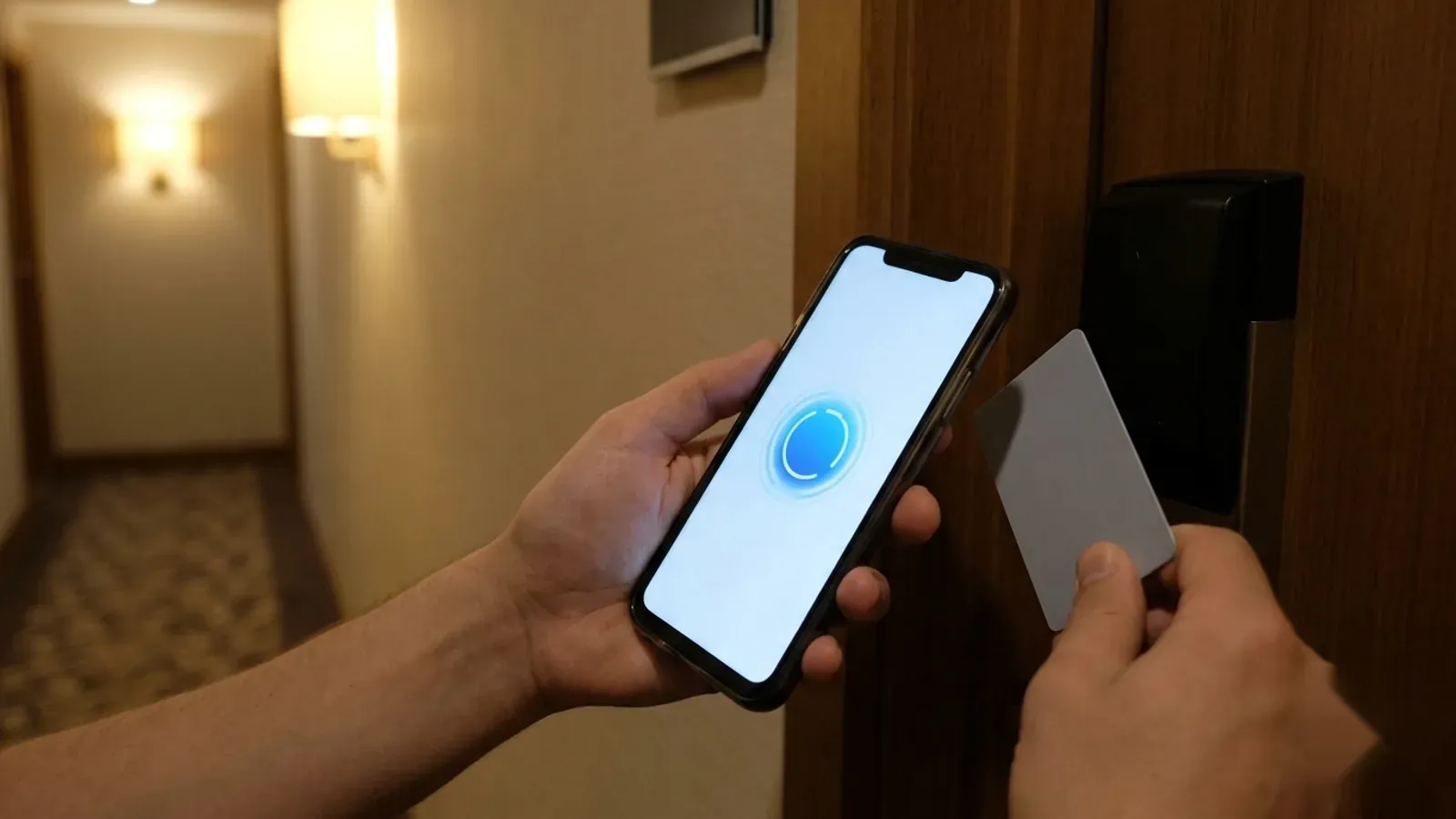
Most U.S. hotels run mobile keys and plastic cards together rather than choosing one. Mobile keys via phone (over NFC or Bluetooth) suit tech-comfortable guests and reduce front-desk contact, but uneven adoption, dead batteries, shared rooms and guests without the app mean a physical RFID card remains the reliable fallback every property still needs.
Not a replacement — a second channel
Mobile room keys have moved from novelty to mainstream, especially among larger brands with the app infrastructure to support them. A guest checks in on their phone, receives a digital key and walks past the desk straight to the room. For the right traveler it is genuinely better.
But the industry reality is hybrid, not either-or. The phone is an additional way in, not a replacement for the card, and the properties getting it right treat plastic and mobile as two channels serving different guests and different moments — with the card as the dependable default.
Why mobile has not displaced plastic
The barriers to a fully keyless property are practical rather than technological. Adoption is uneven: not every guest has the app, wants to install it, or is comfortable using a phone as a key. Older travelers, international guests and anyone who simply prefers a card are all real, and a hotel cannot turn them away.
Then there is the physical world the key has to survive. Phones run out of battery, get left in the room, break or are switched off on a flight. Shared rooms need a second key the primary guest can hand over. And at the busiest properties the network or app can hiccup at exactly the wrong moment. A plastic card has none of these failure modes.
- Adoption gap: not all guests have, want or can use the app.
- Battery and device risk: a dead or absent phone means no key.
- Shared rooms: families and couples often need a second, handable key.
- Reliability: the card works with no signal, no app and no charge.
The front-desk reality
Speak to front-of-house teams and the picture is consistent: even at properties that promote mobile keys, the desk still issues plastic constantly. It is the answer to "my phone died," "I don't have the app," "can my partner have a key," and "I'd just rather have a card." The plastic key is the universal fallback that keeps check-in moving.
Far from undermining mobile, this is what lets mobile succeed. Because the card is always available, a hotel can offer the digital key as a convenience without fear of stranding anyone. The two channels cover each other.
The card is also brand real estate
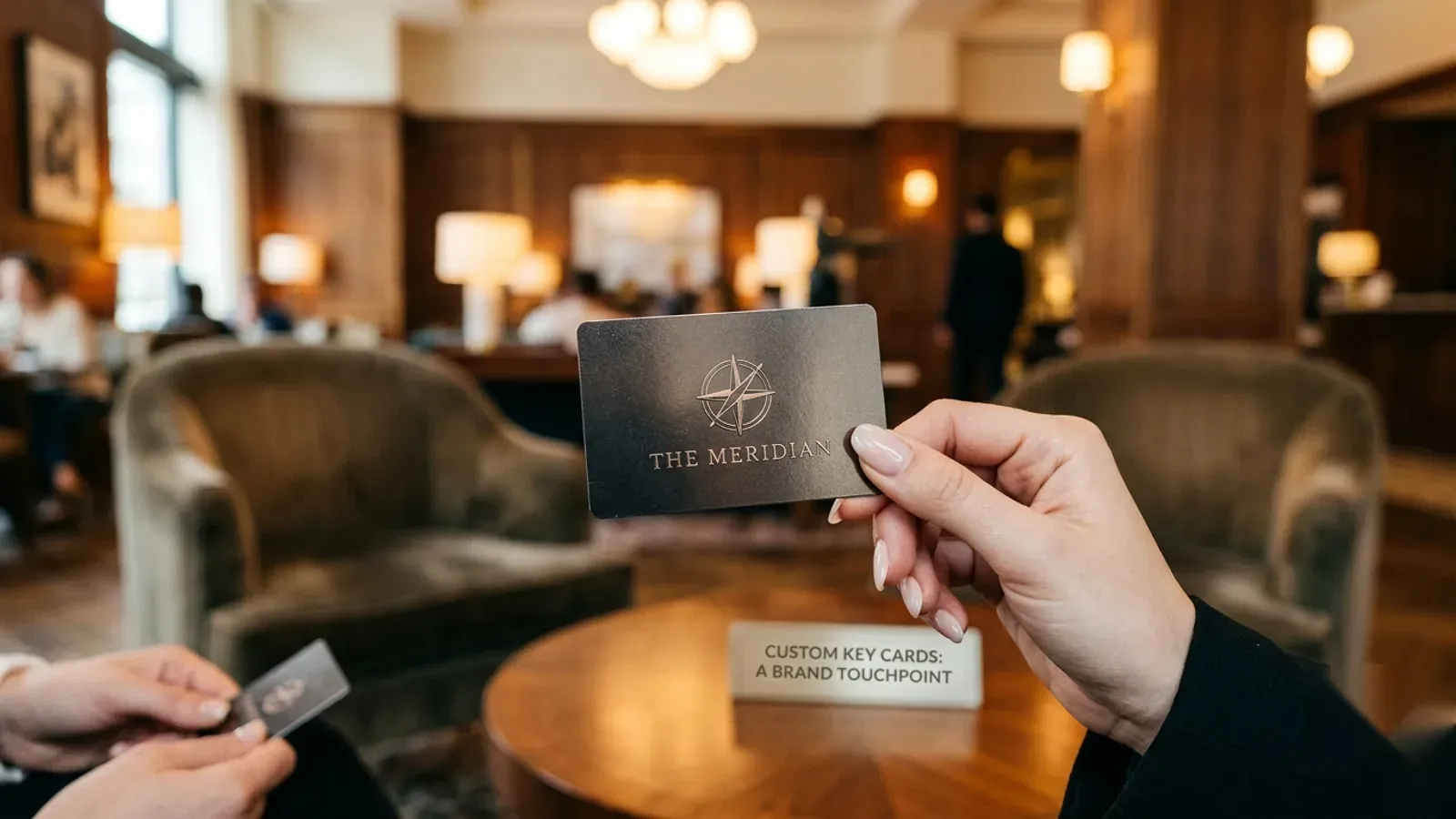
There is a reason properties keep handing out cards even to guests who could use mobile: the physical key is a branded object in the guest's hand at the start of the stay. A phone key is invisible. A well-printed card — in wood, bamboo or custom-finished plastic — is a tangible welcome and a quiet piece of marketing that a screen cannot replicate.
For boutique and design-led hotels especially, that tactile moment is part of the product. The card earns its place in the welcome folder on experience grounds alone, independent of the technology question.
Running both, well
The strongest setup offers mobile keys to guests who want them and a printed RFID card to everyone, with both reading the same locks. Practically, that means choosing cards that match your lock platform — and, where you want to bridge the two worlds, NFC cards that sit naturally alongside a mobile-key rollout.
Mobile keys will keep growing, and they should. But the printed card is not a legacy holdout; it is the reliable, universal, brand-bearing channel that makes a hybrid program work. For the foreseeable future, "both" is the right answer for almost every property.
American Hotel Cards is an independent supplier of compatible blank and custom-printed credentials and is not affiliated with, endorsed by or sponsored by any lock manufacturer. Brand names referenced are trademarks of their respective owners. This article is informational and reports on publicly known industry developments.