Guide
Retrofitting RFID: What Changes Beyond the Key Card
Readers, encoders and PMS integration — the full picture when a property moves from magnetic stripe to contactless RFID. What changes beyond the key card itself.
Retrofitting a hotel from magnetic-stripe to RFID changes far more than the key card: the door locks or readers, the front-desk encoders and the link to the property-management system all have to move to contactless 13.56 MHz technology. The card is the simplest and cheapest part; planning the readers, encoding workflow and PMS integration is where a clean retrofit is won.
The card is the last thing that changes
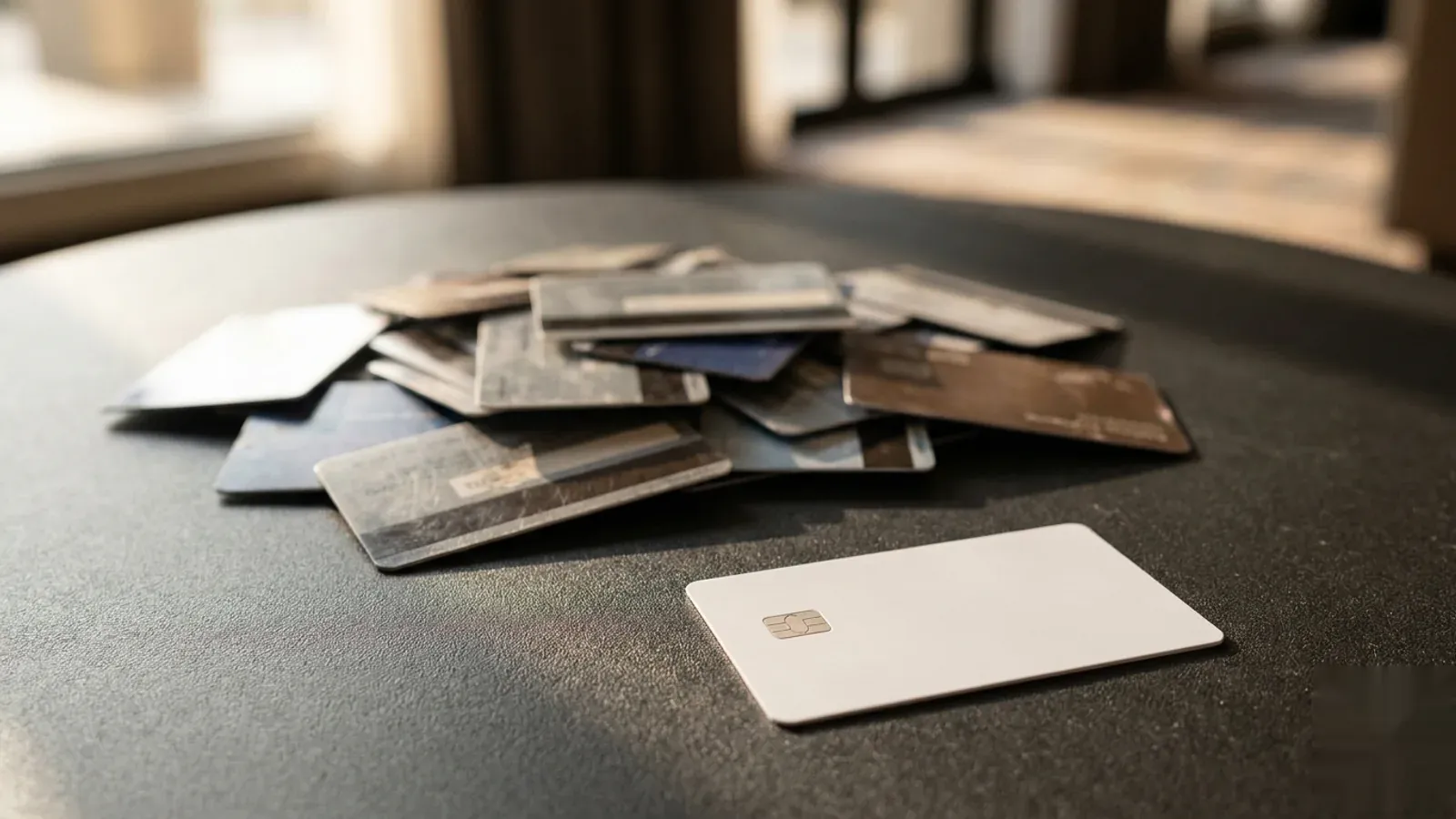
When a property decides to go contactless, attention naturally lands on the visible object: the key card. But the card is the smallest and final piece of an RFID retrofit. The systems that read, write and manage that card — locks, encoders and the PMS link — are what the project actually consists of.
Understanding that order avoids a common mistake: ordering RFID cards before the rest of the chain is ready. The right sequence is to settle the lock and reader platform first, then the encoding workflow, then the integration, and only finally the card stock that ties it all together.
Locks and readers
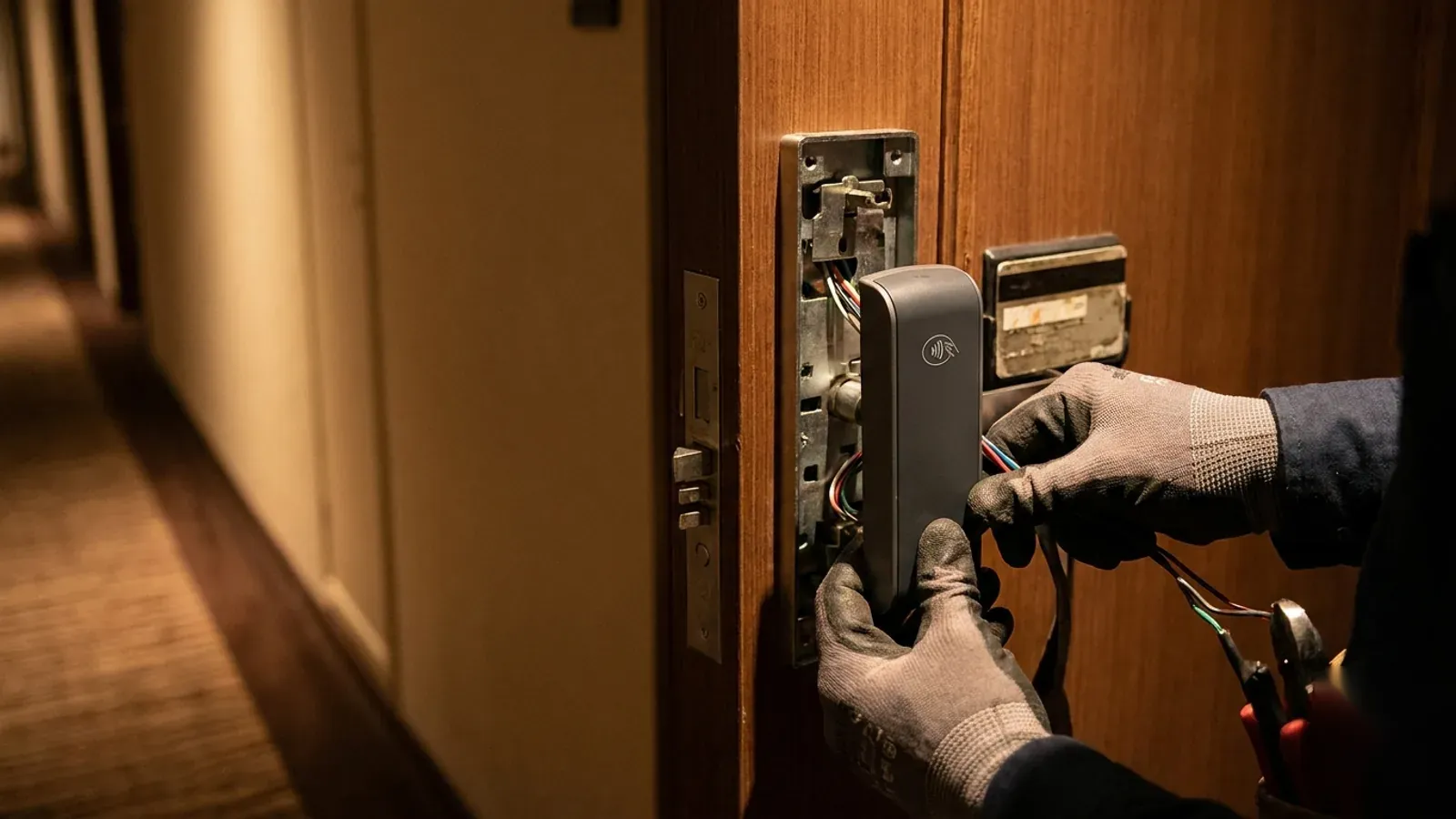
A magnetic-stripe lock physically cannot read an RFID card; the sensing technology is different. So the door hardware changes — either complete contactless locks or, on some platforms, reader modules that upgrade existing locks. This is the largest single line in a retrofit and the one with the longest lead time and most installation labor.
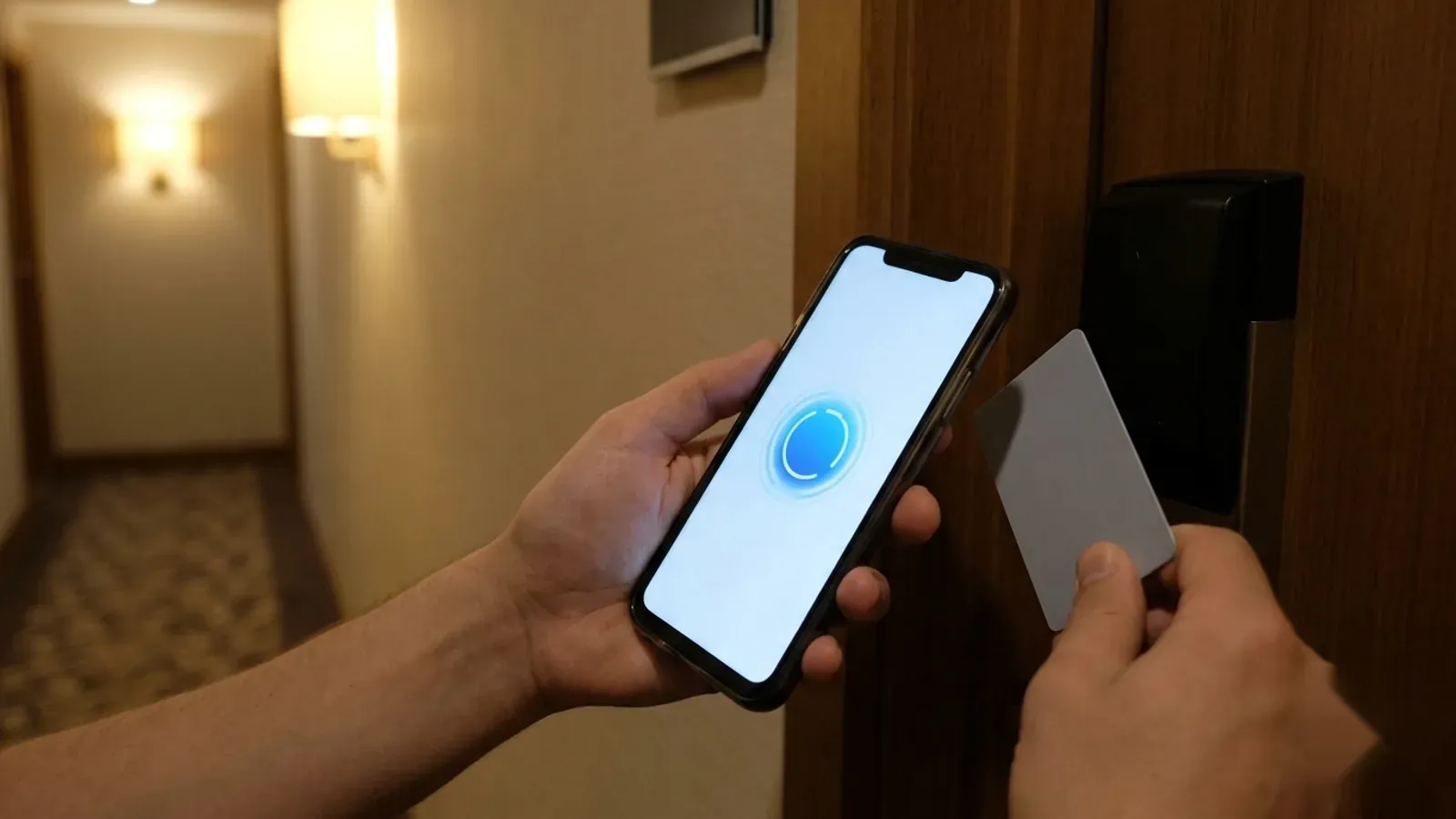
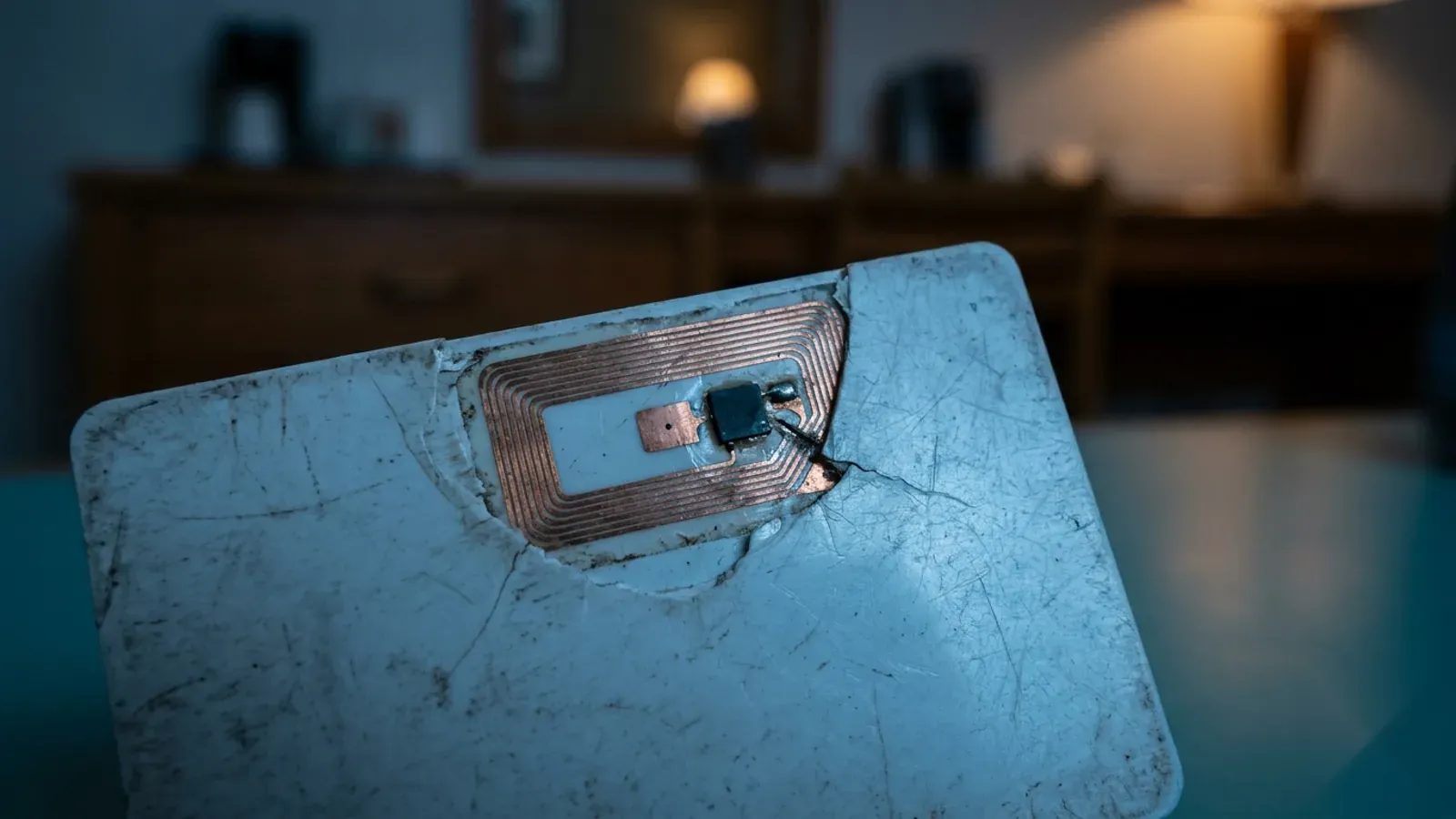
It is also the decision that fixes your credential. Each lock platform expects a particular chip family at 13.56 MHz. Choosing the lock effectively chooses whether your cards use a standard 13.56 MHz smart card, an encrypted 13.56 MHz smart card or an NFC tag, which is why credential spec follows the lock, not the reverse.
Encoders at the front desk
Magstripe encoders write to a stripe; RFID encoders write to a contactless chip. They are different devices, so the front desk gets new hardware as part of the move. The encoder is what programs each card to a specific room and stay window, and it must speak to the same lock platform you have chosen.
This is also where you decide your operating model: cards encoded on demand at check-in, or stock pre-programmed in batches. Most properties encode at the desk so each card carries the right room and dates, which keeps a healthy supply of blank, branded cards on hand at all times.
- New contactless encoders replace magstripe writers at every issuing station.
- Encoders must match the chosen lock platform and its chip family.
- Decide on-demand vs batch encoding — most issue per stay at the desk.
- Keep blank, pre-printed card stock ready so encoding is the only step at check-in.
PMS integration: the part that bites
The least visible and most underestimated piece is the link between the lock system and the property-management system. The PMS holds the reservation — who is in which room and for how long — and the encoder needs that information to program a valid key. If the integration is weak, staff end up keying details twice and errors creep in.
A retrofit is the moment to get this right. Confirm that your chosen lock platform integrates cleanly with your specific PMS version, and treat that integration as a deliverable in its own right, not an afterthought. A smooth contactless check-in depends on it more than on any other component.
Sequencing a clean retrofit
Put together, a tidy retrofit runs in order: choose the lock/reader platform; confirm and configure PMS integration; install the contactless encoders and train the desk; then order card stock specified to the platform — blank for in-house encoding or pre-programmed if you prefer. Phasing by floor or wing lets a property keep operating throughout.
The reassuring part is the ending. Once the chain is in place, the card itself is straightforward and inexpensive, available in plastic or sustainable materials and fully custom-printed. Get the readers, encoders and integration right, and the key card becomes the easy last step — exactly as it should be.
American Hotel Cards is an independent supplier of compatible blank and custom-printed credentials and is not affiliated with, endorsed by or sponsored by any lock manufacturer. Brand names referenced are trademarks of their respective owners. This article is informational and reports on publicly known industry developments.