Product
How RFID Wristbands Power Cashless, Keyless Resorts
One waterproof credential for the room, the pool bar and the spa — how RFID wristbands power keyless, cashless resorts, and what it takes to roll one out cleanly.
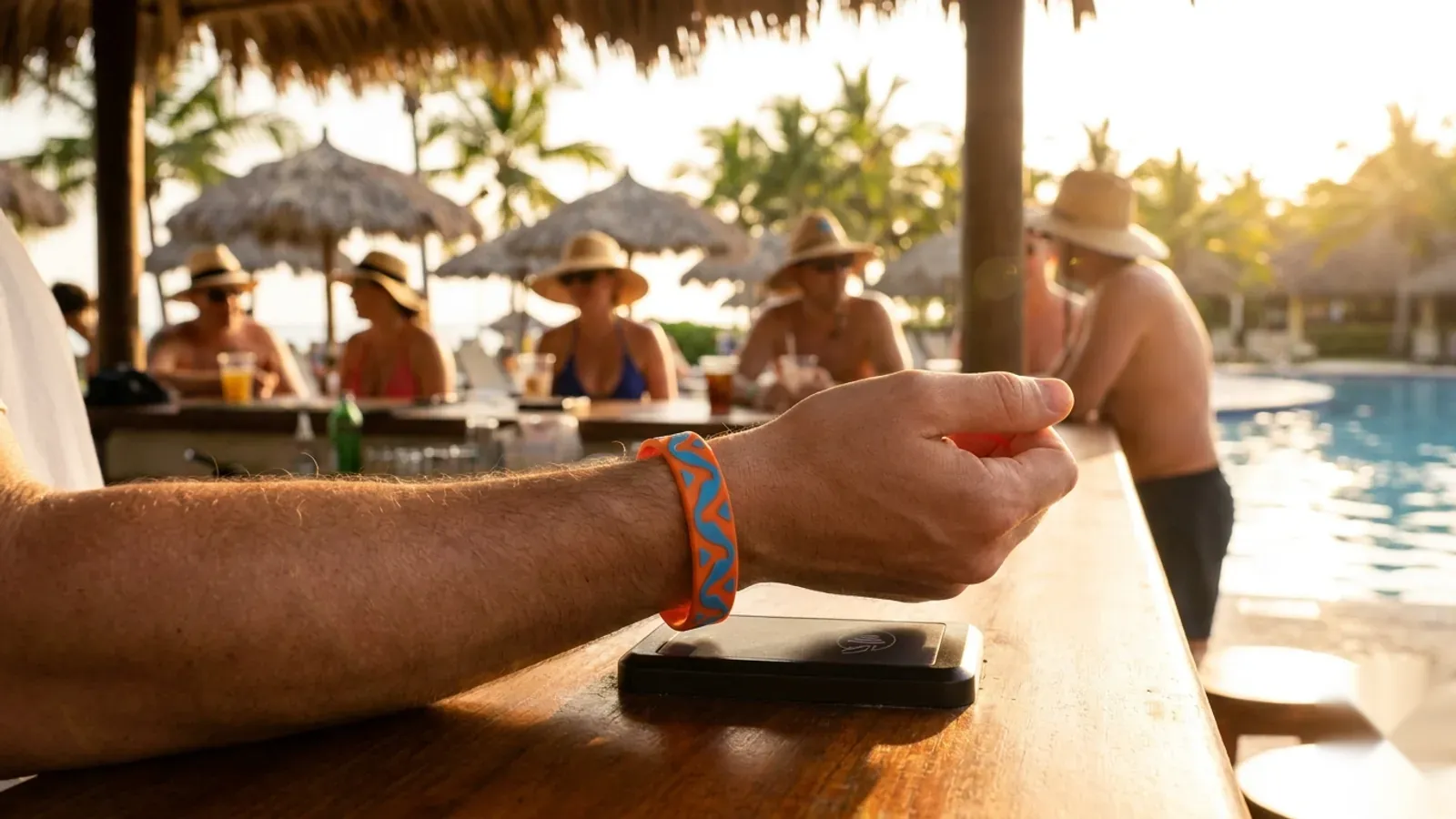
RFID wristbands let resort guests use a single waterproof credential for room entry, cashless payments and access to pools, spas and activities. They work on the same 13.56 MHz technology as hotel key cards, integrate with the property-management and point-of-sale systems, and remove the friction of carrying a card, cash or a phone around water.
One band, the whole property
At a resort the room key is only part of the job. Guests also need to pay at the pool bar, get into the spa, join activities and move between zones — often while wet, in swimwear, with nowhere to keep a card or a wallet. The RFID wristband answers all of that with a single credential worn on the wrist.
Because the band carries the same kind of 13.56 MHz contactless chip as a key card, it can be tied to the guest's folio and read by the same family of locks and readers. Tap to open the room, tap to charge a drink, tap to enter the spa — the wristband becomes the guest's identity for the length of the stay.
Why a band beats a card at a resort
The wristband's advantage is environmental as much as technical. A resort is full of water, sand and sun, and full of moments when a guest has no pocket. A waterproof band solves the carry problem outright and survives conditions that would quickly ruin a paper sleeve or warp a poorly made card.
It also smooths the experience the resort is selling. Cashless taps speed up service at busy bars, reduce cash handling for staff, and let guests stay in the moment instead of running back to the room for a wallet. For all-inclusive and family properties especially, that frictionlessness is a meaningful part of the product.
- Waterproof by design — silicone and sealed bands rated for pool, spa and beach use.
- No pocket required — worn on the wrist, ideal for swimwear and activity zones.
- Cashless taps — faster bar and retail service, less cash handling.
- One identity — room, payments and access on a single credential tied to the folio.
The material choices
Wristbands are not one product. The right band depends on the setting, the length of stay and the brand. IP68 silicone bands are the workhorse for pools and cashless payments; woven fabric bands suit events and festival-style stays; and hand-finished wood-bead bands give a premium, sustainable look for spa and all-inclusive guests who will wear them all week.
Whichever style a resort chooses, the chip inside is the same standards-based credential, so the operational integration does not change with the look of the band.
What a rollout actually involves
Putting wristbands to work is more than handing out bracelets. The bands have to be enrolled and tied to each guest's reservation, the door readers and point-of-sale terminals have to accept the credential, and the property-management and POS systems have to be linked so a tap at the bar lands on the right folio. This is an integration project, and the planning matters more than the plastic.
Operationally there are guest-facing details to settle too: how bands are issued at check-in, how they are deactivated at checkout, how a lost band is handled, and whether bands are single-use for short stays or returned and reused. None of these are difficult, but they are decisions worth making before launch rather than at the front desk.
Starting small and proving it
A sensible path is to pilot before going all-in. Many resorts begin with one use case — cashless payments at the pool, say, or spa access — confirm the integration and the guest reaction, then extend the same band to room entry and the rest of the property.
The end state is a resort where the guest never thinks about keys or cash, just a band on the wrist. Getting there cleanly is a matter of choosing the right band for the environment and integrating it properly with the systems already running the property.
American Hotel Cards is an independent supplier of compatible blank and custom-printed credentials and is not affiliated with, endorsed by or sponsored by any lock manufacturer. Brand names referenced are trademarks of their respective owners. This article is informational and reports on publicly known industry developments.